
Cleared Paths Before the Morning Rush
Snow removal in South Shore for property owners facing strict municipal clearance deadlines and slip-and-fall liability
South Shore carries a mix of older colonial and cape-style single-family homes built through the mid-twentieth century, many with long asphalt driveways, masonry front walks, and abutting public sidewalks that municipal ordinances require to be cleared within hours of a storm. Loja Service Corp handles snow removal for these properties, where the combination of older paver and asphalt surfaces and strict legal clearance windows creates real operational pressure for owners. When a storm ends at 2 a.m. and your municipality requires the sidewalk cleared by 6 a.m., having a contract crew already scheduled is the deciding factor between compliance and a fine.
Under Massachusetts premises liability standards—specifically the framework established by Papadopoulos v. Target Corp.—property owners carry an affirmative duty to use reasonable care keeping walkways, steps, and driveways free of snow and ice accumulation. That duty applies to private driveways and to public sidewalks abutting the property equally. Loja Service Corp approaches each property with blade positioning calibrated to the surface type: asphalt driveways require a different blade height and pressure setting than concrete or paver stone to avoid gouging material that, in older installations, may already have surface wear or settled joints.
Arrange a pre-season site walkthrough so your property boundaries, surface types, and any landscape features that need staking can be documented before the first accumulation.
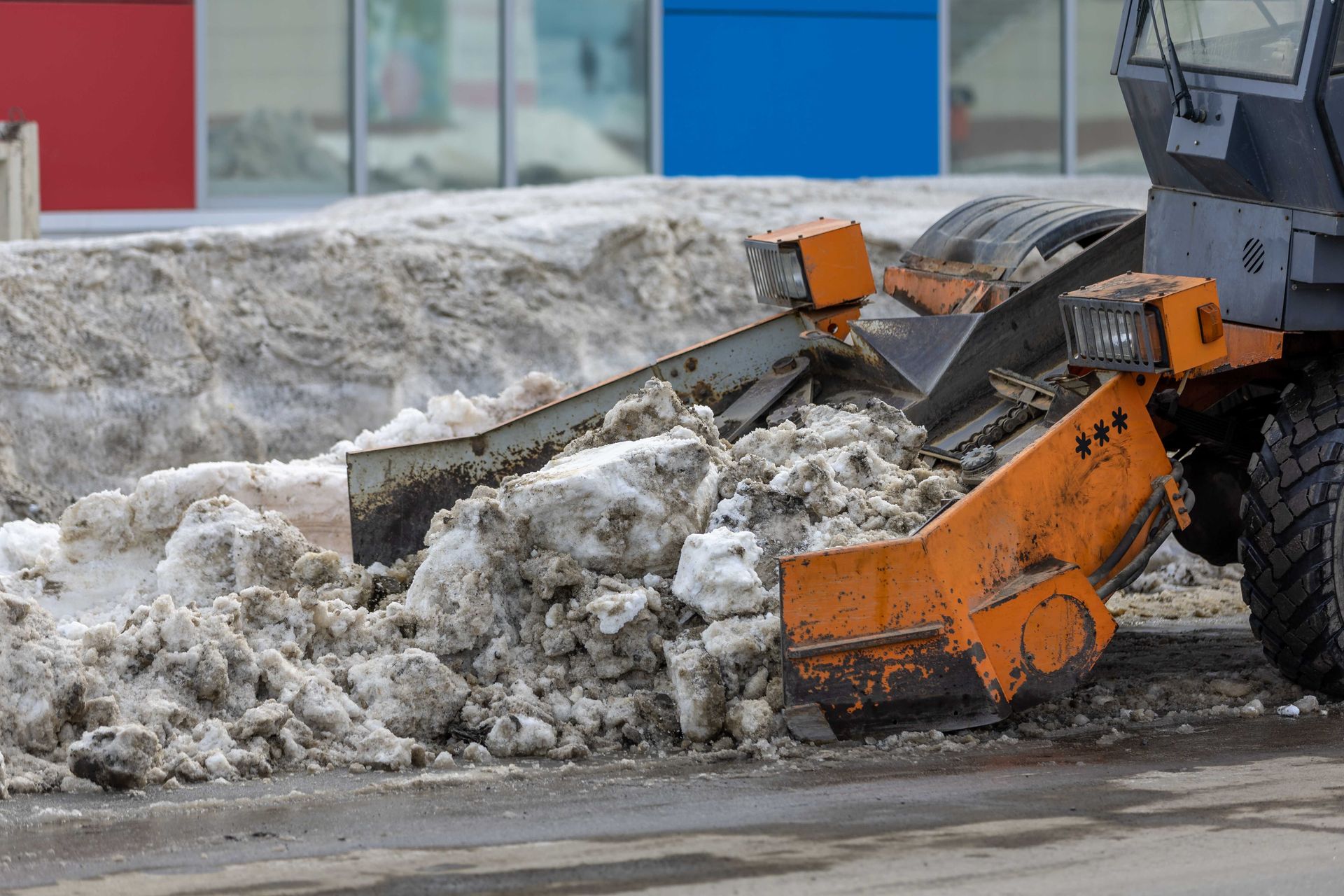
How Professional Snow Removal Handles Surface and Liability Risk
Before plowing begins, property preparation directly affects how cleanly and safely the work can be done. Flexible snow stakes placed along driveway borders and curbs give operators a reference line when accumulation covers the ground entirely—without them, the edge between an asphalt driveway and a lawn becomes invisible under eight inches of snow, and blade drift into turf or landscaping is a predictable result. Similarly, removing garden hoses, extension cords, and decorative lawn items from driveways before the first hard freeze eliminates the most common cause of plow blade damage and property snags during a nighttime run.
Once cleared, the observable difference is immediate and functional: driveways are open before morning commutes begin, walkways meet the municipal clearance standard, and high-foot-traffic entry points—steps, landing pads, and threshold areas—are treated with ice melt staged near entryways before initial accumulation rather than after ice has bonded to the surface. Snow that is cleared before it compresses and refreezes requires significantly less mechanical force and causes less surface abrasion than removal attempted hours later. Pre-treating steps with pet-safe anti-icing product, stored and applied prior to the storm, prevents the bonded ice layer that manual chipping cannot reliably remove without surface damage.
One distinction that affects scope on many South Shore properties involves the prohibition on depositing snow into public streets or rights-of-way—a violation under both state code and most local municipal ordinances that carries financial penalties. Snow must be directed and stockpiled within the property boundary, which on narrower lots with limited side yard space requires deliberate staging decisions during the plow pass rather than after the fact.